In 1987, clustered regularly interspaced palindromic repeats or CRISPR was accidentally discovered in the sequences of DNA in E coli bacteria.
It was not until 2012, that Doudna and others directed CRISPR into a precise gene editing tool.
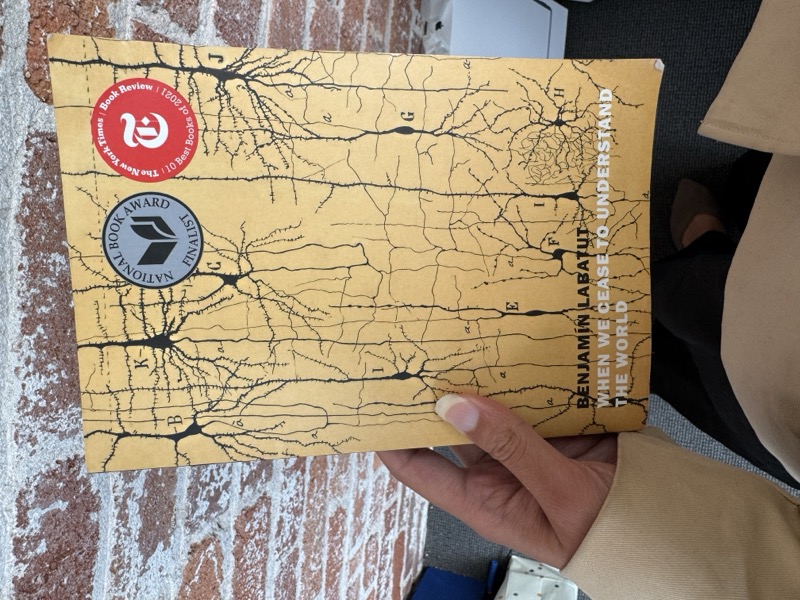
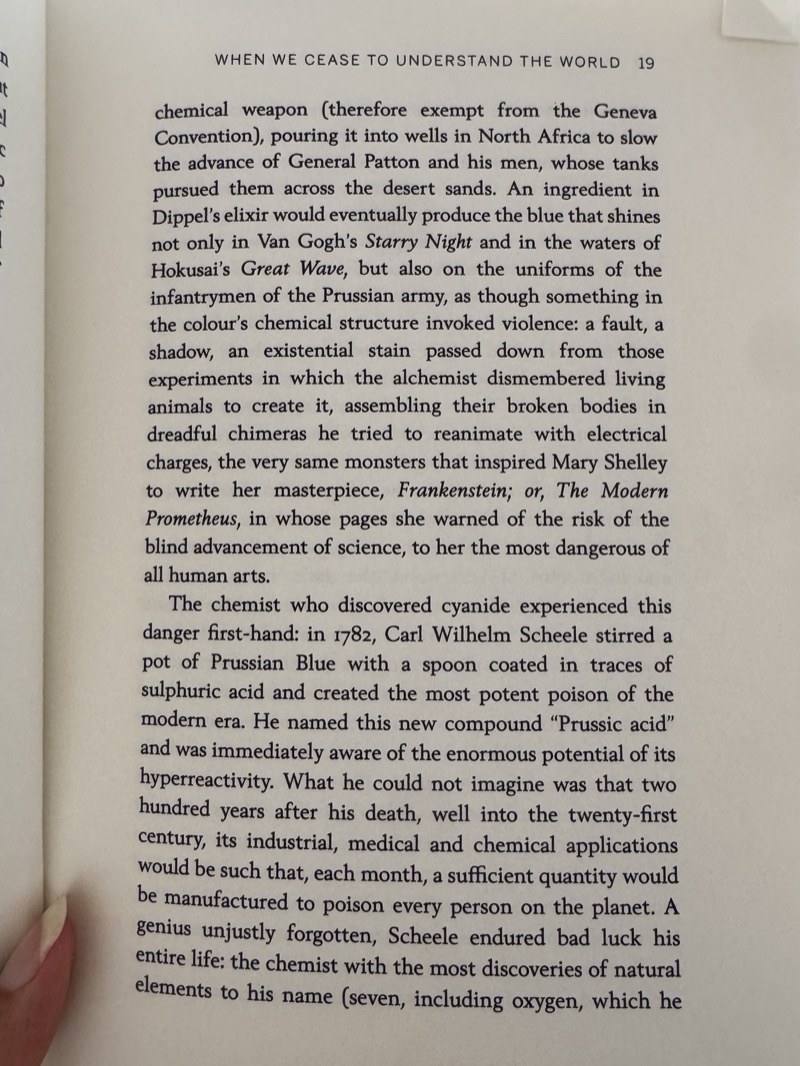
In the first chapter of When We Cease to Understand the World, they tell the story of Carl Wilhelm Scheele, a chemist who accidentally invented cyanide by combining sulphuric acid and Prussian Blue. Similar to CRISPR, it is not the discovery of cyanide that is notable as much as the eventual optimization of it into a dangerous gas infamously used in the trenches of World War I.
I've been thinking a lot recently about how discovery is distinctly accidental and comes years before the engineering and packaging that eventually makes it impactful.
Optimization rarely appears to lead to discovery.
I work at a company where we are building a search engine. We're sitting on the backbones of years of crawling, indexing research efforts. But time and time again, all the actual value we generate as a company comes from variations of packaging: product interfaces, API design, "Exa for code search". The abstraction of the search engine needs to be legible for people to use, the models do not in fact sell themselves.